
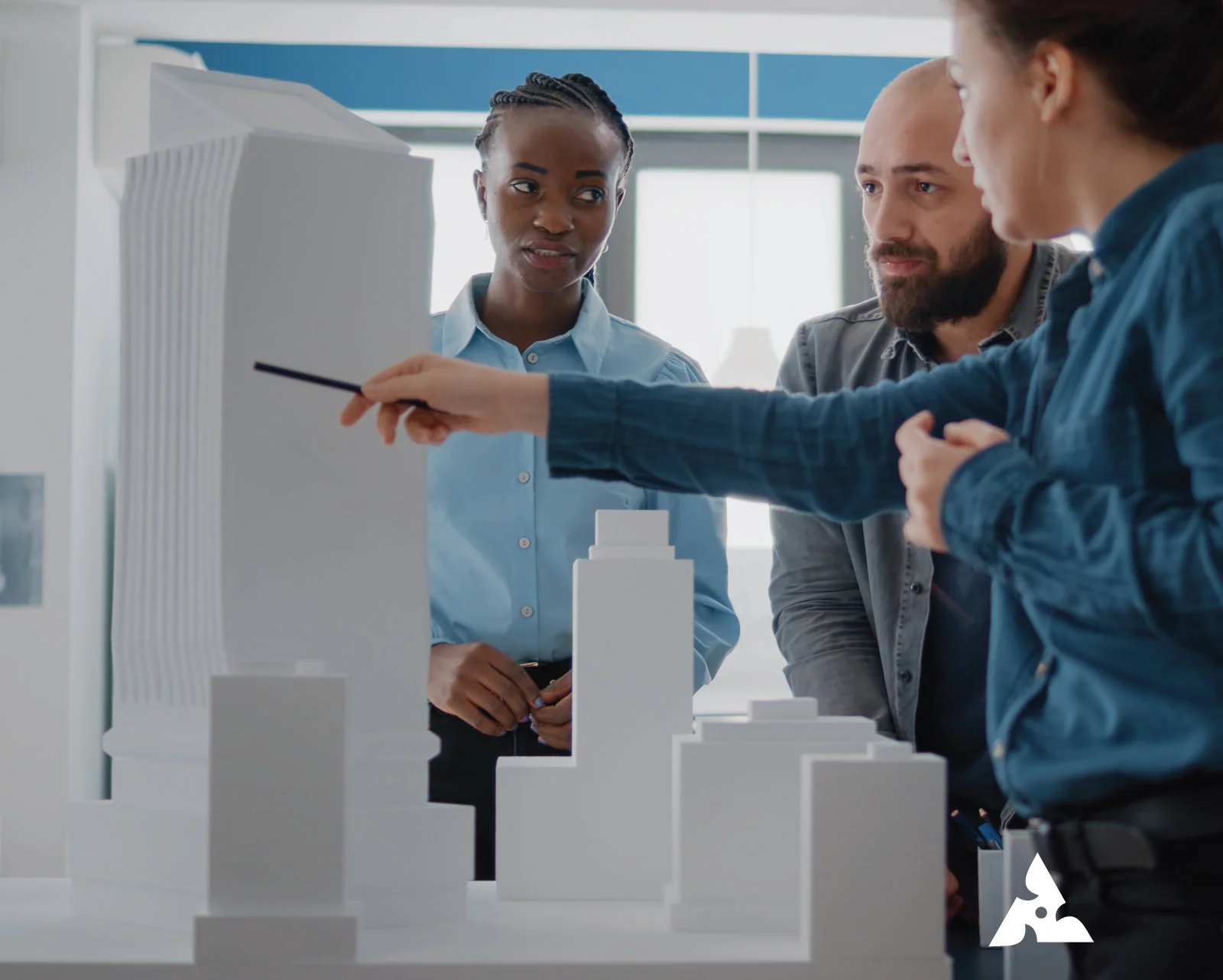
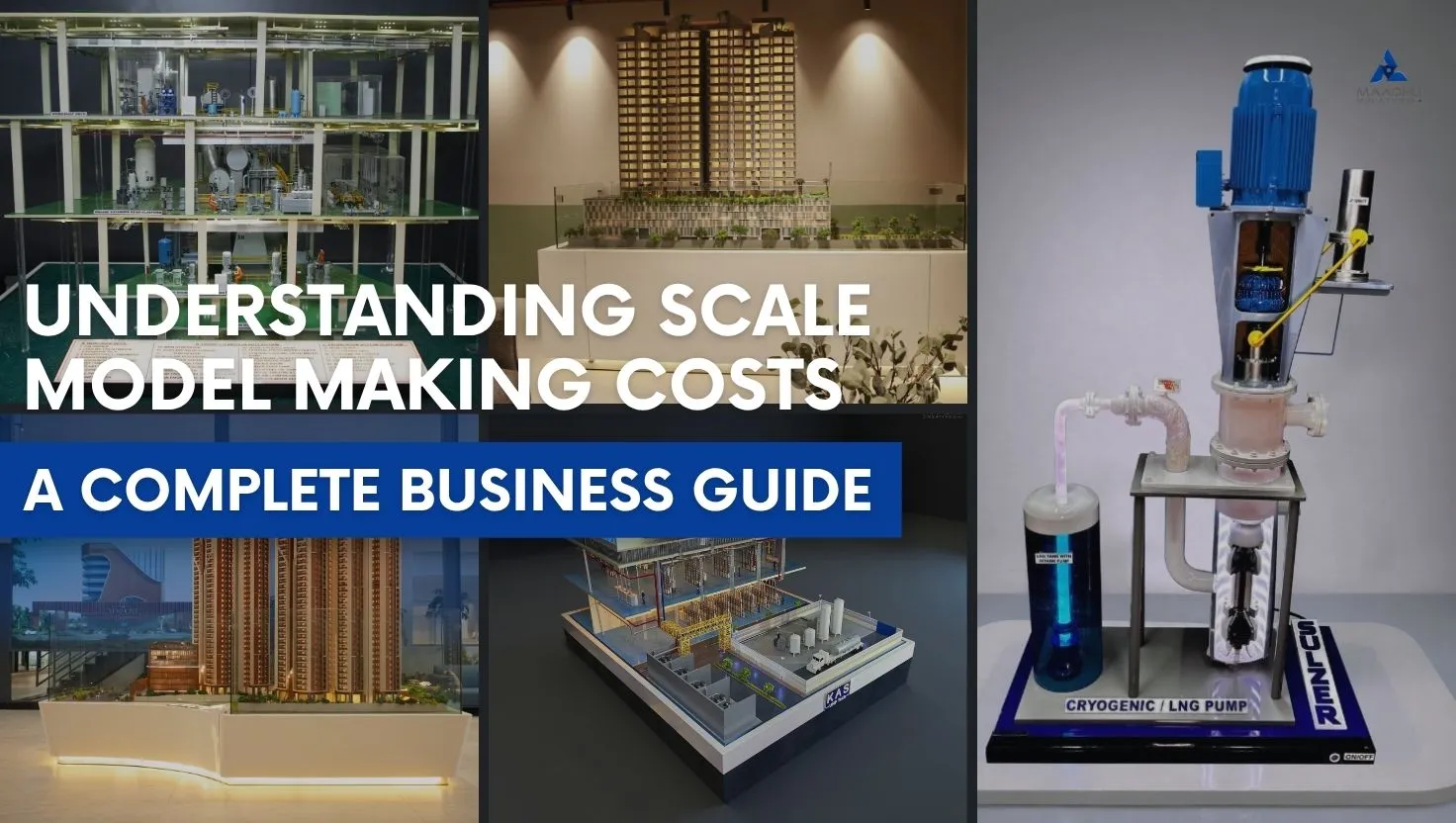
Understanding Scale Model Making Costs: A Complete Business Guide
Introduction
Scale models are used to turn complex ideas into clear and engaging visual presentations. A scale model helps clients, investors, and stakeholders understand the project, whether it’s an architectural project, industrial facility, infrastructure development, or engineering concept.
One of the most commonly asked questions is: What influences the price of scale model making? Since every model is made individually, there are factors that may influence the pricing of individual projects, including size, details, materials, level of complexity, and even personalization. In this article, we'll explore all these aspects and find out the price of your next project.
What Is Scale Model Making?
scale model making is creating a miniature model of an object, building, system, or process in the real world based on an operational scale ratio. Such models can be used to represent sizes, layouts, schemes, and other aspects of a project, all on the same scale.
Scale models are widely used for:
Architectural presentations
Real estate marketing
Industrial project demonstrations
Engineering and infrastructure planning
Urban development projects
Educational exhibits
Museum displays
Product visualization
Exhibition and trade show displays
Scale model creation professionals have a wealth of experience in design, craftsmanship, technical knowledge and advanced fabrication techniques. They will develop scale models for your project that support and explain the vision and intent for your project.
Why Businesses Invest in Professional Scale Models
A scale model of some type will always be much more than just a little project that has been modelled at a smaller size. A scale model creates a very effective way for companies to express their ideas visually in a concise, easy-to-understand manner.
Many projects include a series of technical drawings, engineering specifications, or computer-generated prototypes that do not provide information that is easy for the non-technical person to comprehend; therefore, scale models allow companies to communicate complex ideas to others in an uncomplicated and effective manner.
Businesses invest in professional scale models because they offer several advantages:
Improved project presentations
Better stakeholder engagement
Enhanced investor confidence
Stronger marketing impact
Effective exhibition displays
Simplified communication of complex designs
Better project visualization
Increased credibility and professionalism
Whether presenting a residential township, an industrial plant, or a large infrastructure project, a professionally built scale model helps create a lasting impression.
Why There Is No Fixed Cost for Scale Model Making
One of the biggest misconceptions when it comes to scale model making is that there’s a standard cost per project. In reality, each scale model is unique! No two projects will require the same specifications, dimensions, details or wow factor. That’s why professional model-making companies offer bespoke quotes, not off-the-peg prices. A conceptual architectural model for internal planning demands less effort than a hyper-realistic industrial model for a high-profile show.
How much you need to invest depends on how much design work, fabrication effort, detailing, materials and craftsmanship goes into your dream. Here are the things that affect scale model-making costs
Key Factors That Influence Scale Model Making Costs
Model Size and Scale
The physical size of a model plays a significant role in determining the overall project requirements.
Larger models generally require:
More materials
Additional fabrication time
Increased assembly work
Greater transportation considerations
The scale ratio selected impacts the total complexity of production, as some scales will require a high level of detail to be successfully replicated and created accurately, while others will require larger amounts of raw material and fabrication resources to create.
Choosing a specific scale for your model will depend on the intended use of the model, the amount of display area available, and how you wish to present the finished product
Level of Detail and Customization
Level of detail is one of the most significant factors that influence the amount of effort that goes into making a model.
A simple model may only contain primary structures and layouts, while a more detailed model may incorporate very detailed architectural features, landscaping, infrastructure detail, and custom branding elements.
Additional details may include:
Roads and pathways
Green landscapes
Water features
Vehicles
Human figures
Signage
Utility networks
Interior elements
Highly customized projects require additional planning, fabrication, and finishing work, making them more complex to produce.
Material Selection
The materials used during construction significantly influence a model's appearance, durability, and overall quality.
Common materials used in scale model making include:
Acrylic
MDF
PVC
Resin
Foam board
Metal components
Specialized fabrication materials
3D-printed elements
Different projects require different material combinations depending on their intended use, display environment, and level of detail.
Professional model makers carefully select materials that provide the best balance of durability, precision, and visual appeal.
Advanced Manufacturing Technologies
Modern scale model making combines traditional craftsmanship with advanced fabrication technologies to achieve exceptional accuracy and consistency.
Many professional model makers use technologies such as:
3D printing
Laser cutting
CAD-based design workflows
Digital fabrication systems
Precision manufacturing processes
These technologies help create highly accurate components while maintaining efficiency throughout production.
Modern production technologies enable model makers to create highly detailed and precise features that are often difficult or impossible to achieve using traditional handcrafting methods alone.
Lighting and Interactive Features
Many modern scale models include advanced features that improve visual impact and audience engagement.
Popular enhancements include:
LED lighting systems
Illuminated structures
Interactive displays
Control panels
Moving components
Smart city simulations
Dynamic presentation features
These additions can significantly enhance the presentation value of a model while helping viewers better understand project functionality.
However, they also require additional design, engineering, and assembly expertise.
Project Complexity
Every scale model project presents unique challenges.
Complexity can be influenced by factors such as:
Architectural design intricacy
Engineering systems
Industrial process representation
Terrain development
Infrastructure networks
Mechanical functionality
Technical detailing requirements
Projects with a higher level of complexity require more planning, design coordination, and production effort.
Architectural Scale Models
Architectural models are among the most widely used forms of scale models.
They help architects, developers, and construction companies visualize projects before construction begins and communicate ideas more effectively to clients and investors.
Architectural models commonly represent:
Residential developments
Commercial projects
Villas
Townships
Mixed-use developments
Institutional buildings
Smart city concepts
These models often play a crucial role in marketing, sales, and project approval processes.
Industrial and Engineering Scale Models
Industrial and engineering models are designed to communicate technical concepts, manufacturing systems, and operational workflows.
These models are commonly used for:
Manufacturing facilities
Industrial plants
Power generation projects
Transportation systems
Ports and logistics hubs
Infrastructure developments
Engineering demonstrations
Because these projects often require technical accuracy and detailed system representation, they demand specialized expertise and careful planning.
Industrial scale models are valuable tools for exhibitions, stakeholder presentations, training programs, and project demonstrations.
How Professional Model Makers Evaluate Project Requirements
Before beginning production, professional model makers assess several important aspects of a project.
These typically include:
Project dimensions
Scale requirements
Detailing expectations
Material preferences
Technology requirements
Lighting features
Transportation considerations
Installation requirements
Project timelines
A detailed project brief helps ensure that the final model accurately reflects the client's vision while meeting functional and presentation objectives.
Choosing the Right Scale Model Making Company
Selecting the right scale model-making company is an important step in ensuring project success.
When evaluating potential partners, businesses should consider the following:
Experience
Choose a company with experience handling projects across different industries and sectors.
Portfolio
Review previous work to assess quality, detailing, and technical capabilities.
Customization Capabilities
Every project is unique. A reliable model-making company should be able to adapt to specific project requirements.
Technology and Expertise
Look for a team that combines modern fabrication methods with skilled craftsmanship.
Quality Standards
Attention to detail and precision are essential for creating impactful scale models.
Project Support
Effective communication, transparency, and timely delivery contribute significantly to a successful project outcome.
Conclusion
Having a good understanding of scale model-making costs isn’t a matter of knowing a fixed cost value. It is knowing what level of expertise, materials, detail, technology, and workmanship is appropriate for each project, and what will affect that level on each project. Each scale model has its own unique project requirements, which can be influenced by factors such as size, complexity, customization level, and presentation goals.
A scale model produced to a high professional standard is more than just a visual representation. It is a strategic communication medium that enable businesses to present ideas, engage stakeholders, facilite decision-making and make the complex simple. The right model making company can help an organization get a scale model that truly represents their vision and provides long-lasting value and impact.
FAQs
What do I need to provide to get started with a scale model?
Simply provide us with your project drawings, CAD files, reference photos or any design materials to start. We will review all provided information and suggest you the optimal way of creating a scale model.
Can you create a scale model according to my specific requirements?
Certainly. Every scale model created by us is made taking into consideration the client's requirements for his/her project. We can make you an architectural, industrial, engineering, or exhibition model.
Can I add any lights and custom elements to my model?
Yes. We can include LED lighting and landscaping, branding features, as well as moving parts and other features that are custom-designed to improve the appearance of the model and increase its value.
How can I be sure about the scale and level of detail?
Don’t worry, we will be with you until the end. Based on your goals, the space you have available, and where you will display it, we can assist you in choosing the scale and level of detail that best suits your needs. In this way, your model will express your idea best. According to the above way.
Related Blogs
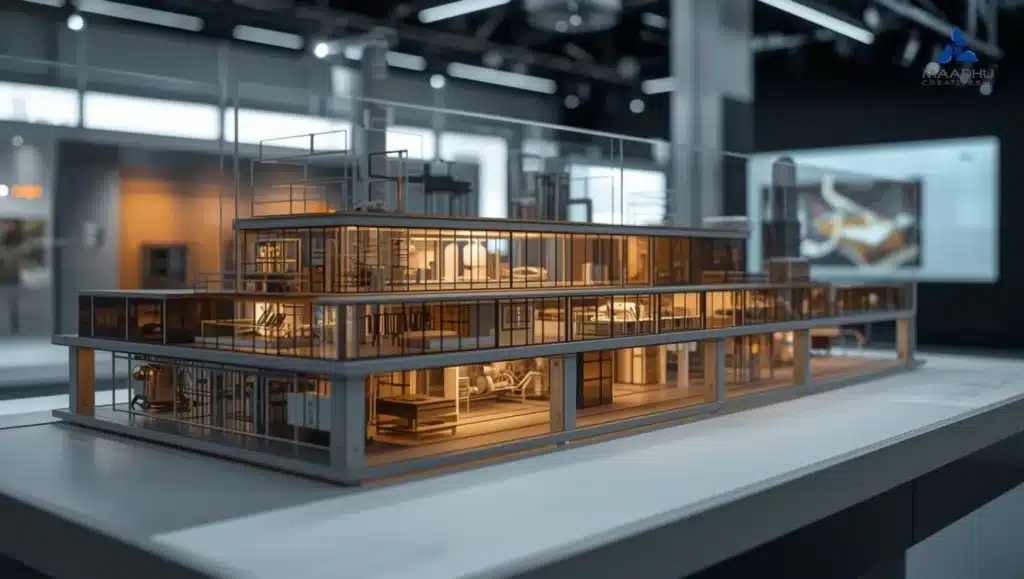
What Are Interactive Models in Model Making? Features, Uses, and Benefits
Interactive models use movement, lighting, and interaction to simplify complex architectural, industrial, and exhibition presentations. Contact us for...
Read More
Maadhu Creatives
•December 15, 2025
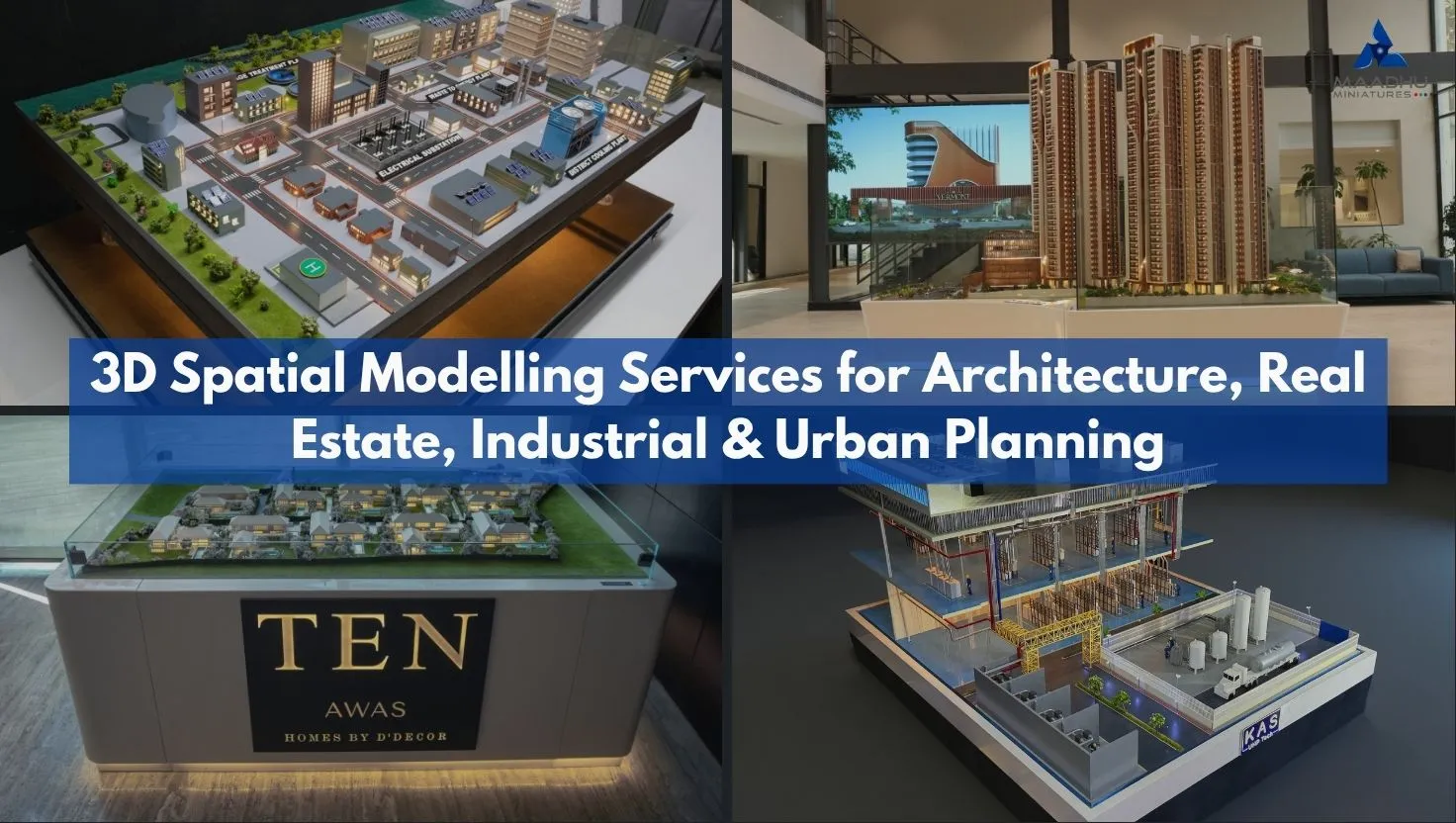
3D Spatial Modelling Services for Architecture, Real Estate, Industrial & Urban Planning
Looking for reliable 3D Spatial Modelling Services? Maadhu Creatives delivers high-quality digital models that improve project accuracy, collaboration...
Read More
maadhu creative
•August 06, 2026
What Does a 3D Model Maker Do? Roles, Skills, Process & Uses
Learn what a 3D model maker does, how 3D modeling works, where it’s used, and how to choose the right professional for your project.
Read More
Admin
•September 02, 2026
