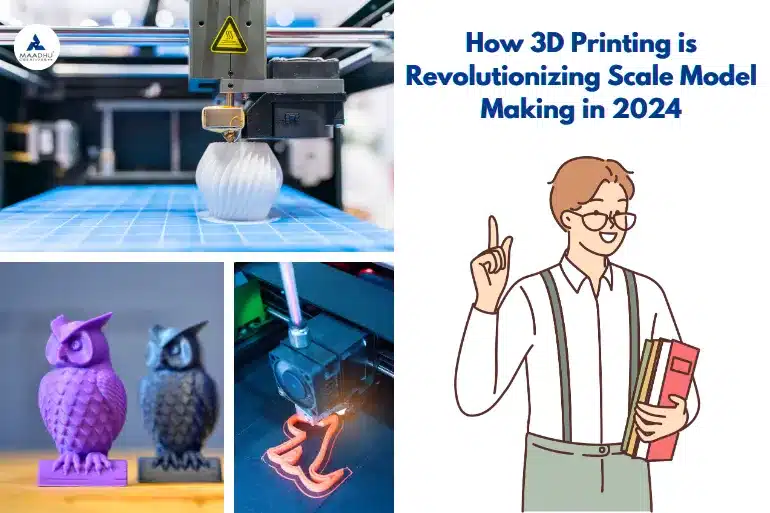

How Fused Deposition Modeling (FDM) Works in 3D Printing
How Fused Deposition Modeling (FDM) Works in 3D Printing
Table of Contents
3D printing is now an important factor in the development of industries that range from education and manufacturing to healthcare and the creative arts. The most commonly utilized methods in this field are Fused Deposition Modeling (FDM). The method is known for its low cost as well as its reliability and flexibility. FDM has played a significant role in the development of rapid prototyping and additive manufacturing. In this article, we will discuss the way FDM 3D printing operates and its background, as well as the applications and its significance as an indispensable tool for modern production and design.
The Origins of Fused Deposition Modeling
Fused Deposition Modeling (FDM) was developed back in the year 1988, in 1988 by Scott Crump, co-founder of Stratasys. In the early days, making complicated prototypes was time-consuming and costly due to conventional manufacturing techniques. FDM created a different method, creating objects layer-by-layer instead of cutting or molding materials. This process of additive manufacturing allowed for the production of precise designs economically and efficiently.
The advent of FDM changed prototyping and allowed designers, engineers, and amateurs to swiftly transform digital ideas into tangible objects. In the present, it is an extremely sought-after method provided by 3D printing services around the world.
How FDM 3D Printing Works
The FDM 3D printing process is simple in concept but relies on precision and controlled materials. A 3D printer melts 3D printing filament and deposits it layer by layer to create a three-dimensional object.
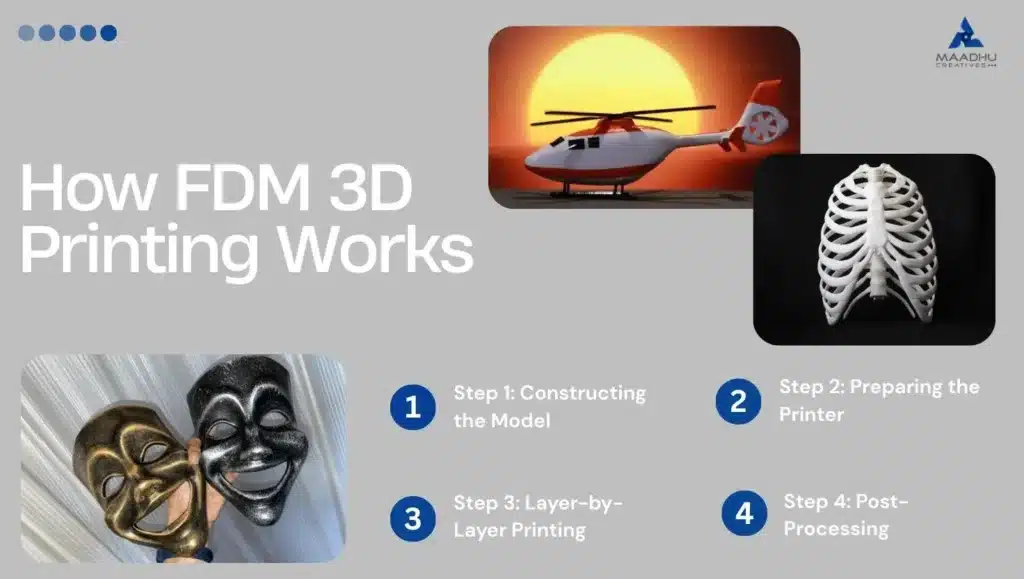
Step 1: Constructing the Model
The process begins by creating a digital model using CAD (Computer-Aided Design) software. The model is exported in the form of an STL as well as an OBJ file, and then sliced by 3D printing software. This software splits the object in thin layers. The program then generates directions for printing.
Step 2: Preparing the Printer
Before printing starts, the printer is installed using the loading of filaments, adjusting the build platform, and then adjusting the temperature of the bed and nozzle. A proper setup will ensure that each layer is properly adhered to and minimizes the possibility of warping and failures in prints.
Step 3: Layer-by-Layer Printing
The printer heats the filament to the point that it melts, and then deposits it along the path that is specified. Each layer is set before the next one is placed to form the final piece. Achieving precision in nozzle movement temperature and flow control determines the print's quality and quality.
Step 4: Post-Processing
After printing, the majority of objects require post-processing. This may include removing the support structure, smoothing out surfaces, the sanding process, or painting. Post-processing can improve the appearance and the longevity that the finished product.
The Science Behind FDM
Fused Deposition Modelling (FDM) combines areas of study from materials science, thermodynamics, and mechanical engineering:
- Material Behavior: Different types of filament (PLA, ABS, PETG etc) melt when heated, and solidify when cooled; thus the material properties play an important role in the strength, flexibility and adhesion of the material.
- Temperature Control: Keeping the right temperatures of the nozzle and the bed will aid in forming a strong connection between the layers.
- Precision Mechanics: An exact placement of filament by extruders or stepper motors can significantly improve the precision and dimensional accuracy of your surface.
Fusion deposition is an excellent option to make functional prototypes and models with complicated geometries thanks to the mix of engineering and science that is that is the basis of this technique of 3D printing.
Why FDM is Widely Used
FDM 3D printing is popular in 3D printing services for several reasons:
- Cost-Effective: Low-cost printers and filaments have allowed businesses and individuals to access FDM.
- Versatile Materials: An array of different types of thermoplastics are available for FDM to meet your needs.
- Easy to use: With many desktop FDM printers being readily available for the home and schools, many individuals can experiment with 3D printing using FDM technology.
- Rapid Prototyping: Designers can produce prototypes very quickly through an efficient test-and-iteration process once they have a design to work from.
As a result, FDM is an affordable, versatile, and rapid 3D printing technique that can be used by both industry and individual consumers.
Applications of FDM 3D Printing
FDM technology has applications in many fields:
- Rapid Prototyping: Quickly test product concepts before full-scale production.
- Manufacturing Aids: Create custom-designed jigs, fixtures and assembly tools upon demand.
- Education: Researchers and students can build models using tangible objects to better grasp the intricate structures.
- Healthcare: Prosthetics, dental devices and surgical models can be printed with FDM
- Creative Projects: Artists, hobbyists and even artists can create functional and attractive objects.
With its quick and cost-effective manufacturing of goods, FDM encourages innovation and exploration.
Advantages and Limitations of FDM
Advantages:
- Low cost for prototyping and small-scale production
- Wide variety of 3D printing filaments available
- Minimal waste due to additive manufacturing principles
- Easy to operate, suitable for beginners and professionals
Limitations:
- Layered surface finish may require post-processing
- Not as precise as SLA or SLS printing
- Limited heat and strength resistance for some applications
FDM is one of the most common forms of 3D printing still today even with its constraints for prototyping or producing small quantities.
The Future of FDM
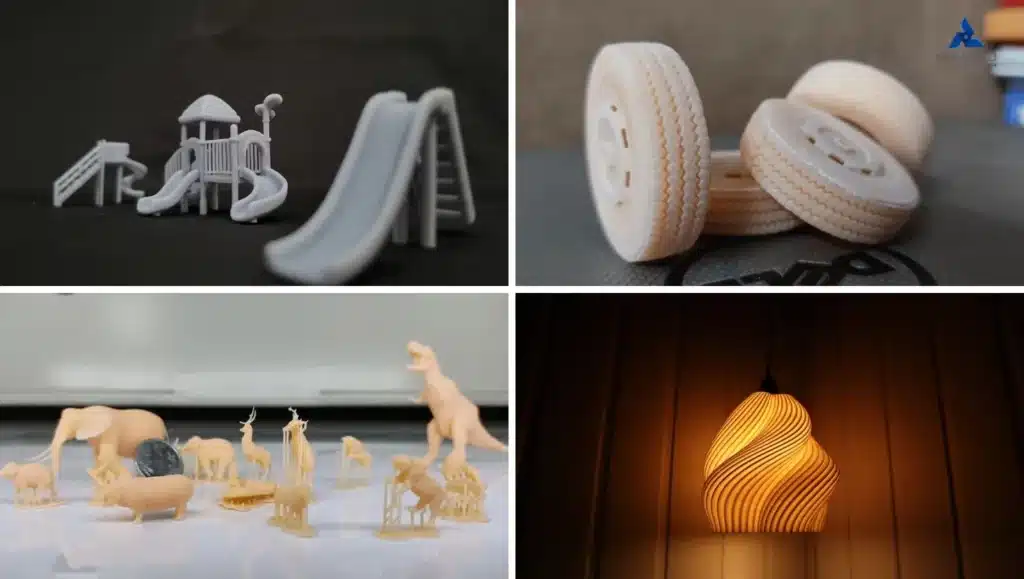
Next-generation FDM printing is promising. Innovative developments such as multi-material printing, superior filament types, and faster printing speeds are expanding options for FDM printing. 3D printing companies now provide the most advanced FDM options, such as high-precision, flexible, and mixed color prints.
In the future, as additive manufacturing blends with traditional manufacturing methods, FDM will remain essential for the creation of cost-effective, custom, and environmentally sustainable products. Its availability ensures that educators, as well as hobbyists and small-scale businesses, will continue to benefit from this multifaceted technology.
Conclusion
Fused deposition modeling (FDM) has changed the way things are made, from the beginning of the design process to the end of the production process. Scott Crump invented this process in 1988 and since then FDM has become a key element of 3D printing services, by enabling quick prototyping and low volume production economically and feasibly. FDM uses the layering of 3D printer filament to bring to fruition the digital rendering of objects with precision and speed.
By understanding the process behind FDM 3D printing, new opportunities will create new avenues of creativity, innovation and exploration in the field of additive manufacturing, research, education, and creativity. As 3D printing technologies continue to develop the utilization of FDM will remain integral to designers, engineers and hobbyists.
Recent PostsFrequently Asked Questions
Q1: What exactly is Fused Deposition Modeling (FDM)?FDM is an 3D printing technique which creates layers of objects by melting 3D printing filaments which makes it perfect for rapid prototyping as well as small-scale production.
Q2: What are the materials that FDM printers make use of?FDM printers generally make use of thermoplastics like PETG, PLA, ABS and TPU. These materials provide the perfect balance of toughness as well as flexibility, along with user-friendliness.
Q3: What is the reason FDM is so popular in 3D printing?FDM is cost-effective, flexible and easily accessible. It allows quick creation of functional and prototype parts which makes it a standard for additive manufacturing