

What Are Interactive Models in Model Making? Features, Uses, and Benefits
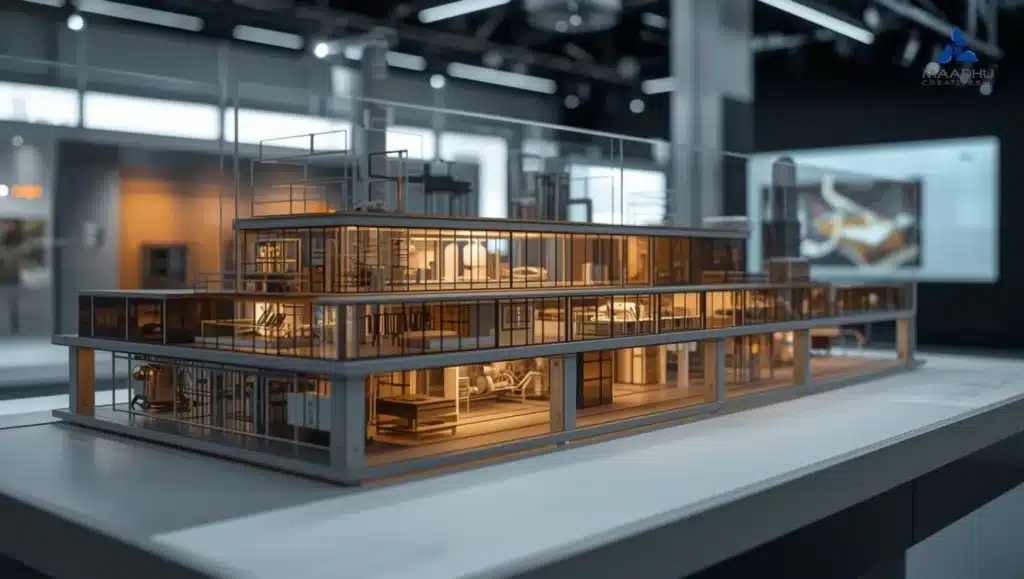
Interactive Scale Models: Features, Uses, and Benefits
Table of Contents
Introduction
In the present day, new methods of designing, engineering, and presenting products are outgrowing traditional static model making. Originally, miniature models were characterized as visual representations of a basic concept however, through advancement in interactive technologies, professionals in today's marketplace are using more dynamic types of models to communicate complex concepts so others can comprehend and appreciate them.
As opposed to just seeing the model, interactive models enhance the communication process by giving the audience the opportunity to physically experience the model using interactive features such as motion, light, sound, and other types of interactions with the model when it is presented to them. Interactive models serve as tools for both presenting a product to an audience and allowing the audience to experience the model through interaction. As a result, a presenter is able to engage an audience at a deeper level by allowing them to understand the process, structure, or system within a project.
As the need for clarity, engagement, and a strong visual impact has increased within the professional community, the responsibility of using an interactive model within the development of a product has become a necessity for many professionals working on models for architectural, industrial, and exhibition purposes.
What is an interactive model?
Interactive models are scale models that involve lights, movements, tactile functionalities, and sensors to help users comprehend a project better. Unlike passive models, they permit interaction with any part of the model.
Interactive models are highly popular in architecture, real estate, industry, infrastructure, exhibits, and other educational projects for efficiently conveying complex concepts.
Understanding Interactive Models in Modern Model Making
Interactive models are made to engage users beyond visual. In contrast to static miniature models, they contain elements such as moving, LED lighting, sensors, touch controls as well as mechanical features. This allows users to play with the model in a more active way and gain a better understanding of the idea that lies behind it.
For architectural models that incorporate interactive elements such as the ability to rotate floors, light systems or controls that are based on touch help users and others understand plans, zoning or spatial plan. In the same way, industrial models utilize moving parts to show the workflow, machine operations as well as production sequences.
Because of this Interactive models can be used as working models that allow architects, engineers and decision-makers to model real-world performance prior to actual implementation. They're particularly useful in models for exhibitions as well as custom scale models and presentation models, in which clarity and interaction are crucial.
Important Features of Interactive Models
Interactive models of high-quality are able to blend aesthetics with functionality. The most significant features are:
Functional Movement
Many interactive models contain moving parts, rotating sections or mechanical actions that mimic real-world processes. They are ideal models to demonstrate the processes involved in transportation, infrastructure, manufacturing or architecture design.
LED Lighting and Visual Indicators
LED lighting enhances both visual appeal and understanding. In exhibition and architectural models lighting can illuminate zones or simulate effects of day and night, or show the flow of energy and system connectivity. Visual indicators can make complex information more understandable.
Custom and Modular Designs
The majority of interactive models are built to meet the requirements of the project. From materials and scale to interaction types and detail each element is customized to meet the needs of the client. Scale models that are custom-designed guarantee accuracy, relevancy and an impressive impact on presentation.
Realistic Miniature Detailing
Despite their interactive elements they retain a high degree of realisticity. Models of miniatures and scale models in 3D are created with precision, precise proportions and realistic textures to accurately reflect the real world.
User-Centered Interaction
Effective interactive design encourages user interaction while minimizing the amount of technical knowledge required by the user to operate it. It is important that the buttons, switches, or touch screens are positioned so that the user can easily navigate through them. This is particularly relevant when creating interactive models for exhibitions or presentations that may be presented to a wider audience than just the designer.
Strong Construction for Easy Care
Interactivity has been improved due to the use of higher quality materials, such as plastic, wood, and metal, to manufacture interactive products. These materials also contain higher quality electrical components, such as switches, lights, etc. This makes it possible for interactive products to perform reliably over time without frequent breakdowns because they were designed with modular construction and therefore can be easily maintained as well as repaired or upgraded.
Applications of Interactive Models
Interactive models are used extensively in a variety of industries due to their effectiveness and versatility.
Architectural and Real Estate Models
Interactive architectural models assist clients, investors, as well as authorities to understand layouts, spaces and design intentions. Moving elements, lighting, and interactive controls increase the spatial comprehension, resulting in quicker approvals and better making decisions.
Industrial and Infrastructure Projects
For refineries, factories, power plants, and other infrastructure development Interactive industrial models show processes, machinery functions and safety systems. Working scale models can help you identify possible issues prior to real-world implementation.
Trade Shows, Exhibitions and Museums
Interactive exhibition-type models stimulate interest and promote participation. The use of interactive mediums such as movement, lights, and touch enables the user to understand difficult-to-grasp concepts while providing visitors with a lifetime of valuable experiences.
Educational and Corporate Presentations
Interactive models provide a method for simplifying and facilitating complex technical issues in corporate board meetings, school classrooms, and training settings. Those using these models physically manipulate or interact with the model to improve both retention of information and the ability to communicate effectively.
Who Should Utilize Interactive Modeling?
Professionals and organizations with the need to express sophisticated concepts clearly and effectively are perfect candidates to use Interactive Models. Architects, Industrial Engineers, Real Estate Developers, Manufacturers, Exhibition Designers, Educators, and Corporate Decision-makers can all benefit from the use of Interactive Models.
These models are particularly useful when seeking approval from clients, presenting to investors, exhibiting at trade shows, or demonstrating educational material.
Benefits of Interactive Models in Model Making
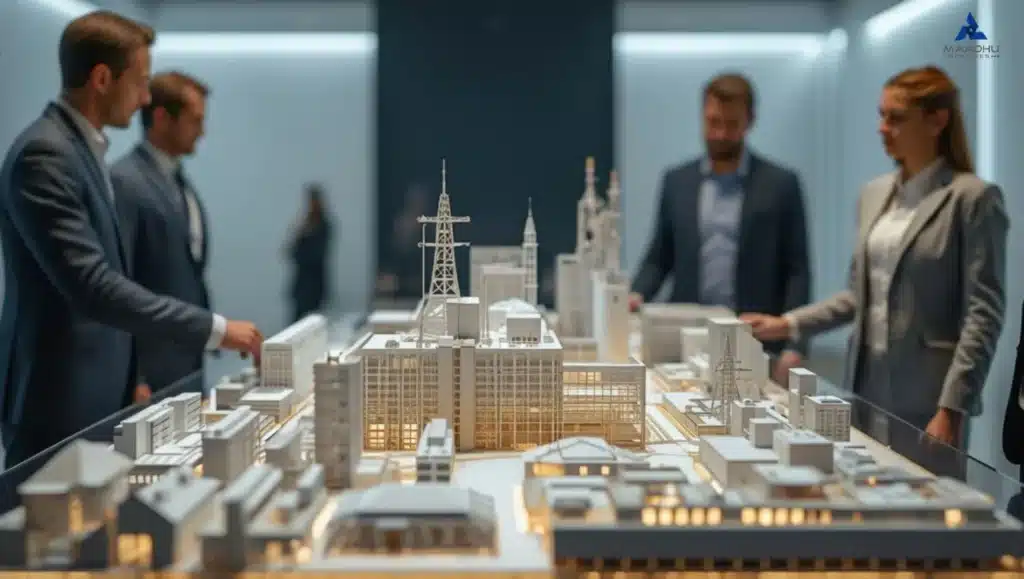
The rising popularity of interactive games is fueled by the numerous advantages they bring.
Increased Engagement
People are naturally drawn to objects that they influence. Interactive models draw interest, stimulate exploration, and boost the amount of time spent by viewers.
An understanding of complex Concepts
As opposed to static miniature models interactive models permit step-by-step demonstrations of systems, processes and spatial relations which makes them extremely effective for industry, architecture, and for exhibitions.
Greater Confidence in Clients
If clients can look into the custom models and models of their own They are more confident about the project. This results in faster approvals and more effective decision-making.
Increased Marketing and Branding
Interactive models showcase the latest technology, accuracy and professionalism. They can be used as effective marketing tools at trade shows, exhibitions and client conferences, helping brands make an impression.
Better Return on investment
While interactive models might require a greater initial cost in comparison to static designs, interactive models can provide higher value in the long run. Better understanding, less mistakes in design, speedier approvals, and more engaged can make them a cost-effective option.
Individualized Solutions for specific requirements
Interactive models can be completely modified to fit specific project objectives. Customized scale models guarantee accuracy, relevancy and efficiency across all sectors.
Interactive Models vs Static Models
Miniature static models concentrate primarily on the visual appeal and simple representation. Interactive models blend realism and functionalities, resulting in more of an immersive and insightful experience.
While static models can be a good fit for minimalist or budget-conscious displays, interactive models are much better for presentations to clients, exhibitions as well as educational demonstrations in which understanding and engagement are the most important.
Technology is used in Interactive Model Making
Technology plays an essential role in the modern world of interactive modeling. Modern advances in LED systems, sensors, microcontrollers and mechanical engineering allow the creation of highly reliable, dynamic and visually accurate models.
3D scale models paired with interactive elements permit engineers and designers to display realistic renderings of industrial, architectural and exhibition designs with great precision and ease of use.
Why Interactive Models Are the Future
The future of professional model creation is through interactive models. Interactive models provide an experience that is based on user interaction, custom design, and realistic detail; something that cannot be created with static models.
Since many industries are focused on creating clear communication and a positive and responsive engagement experience, interactive models have created a standard in all industries related to presentations, marketing, education, and decision-making.
Conclusion
Interactive models have also brought model-making to the next level. Through the blending of interactivity, functionality, and realism, audiences can engage, investigate, and comprehend projects in a manner that is far easier and faster than with a static model.
Interactive models are available as either functional working models, custom or scale models, or models used as exhibits and presentations, all three types of interactive models give an audience an opportunity to see professionalism, clarity, and engagement. For architects, engineers, educators, and marketers, creating and using interactive models is now an essential investment, not an option.
Through the use of dynamic features, accurate 3D representations, and realistic looking elements, interactive models have become the foundation of all professional model-making activities.
Thanks for reading
Share via social media Instagram Facebook Twitter LinkedinFAQs
What is the Definition of Interactive Model Making?
Interactive models are physical scale models that include features such as lighting, movement, touch controls, or sensors. These features allow viewers to interact with the model and understand a project more easily.
How do interactive scale models work?
Interactive scale models combine detailed physical model making with electronic or mechanical components. Depending on the project, users can activate lights, move sections, operate controls, or demonstrate different parts of a design.
What features can be added to an interactive model?
Common features include LED lighting, switches, touch panels, sensors, moving parts, rotating sections, digital displays, and sound. The features can be selected and designed according to the project's requirements.
Where are interactive models used?
Interactive models are used in architecture, real estate, industrial projects, infrastructure, exhibitions, museums, education, and corporate presentations. They are especially useful for explaining designs, systems, and processes.
What is the purpose of an interactive model?
The main purpose is to make a project easier to understand and more engaging. Instead of only viewing a miniature, users can interact with selected elements to see how different parts of the project work or connect.
What is the difference between a static model and an interactive model?
A static model mainly shows the appearance and layout of a project. An interactive model adds features such as lighting, movement, or controls, allowing users to explore specific elements and understand the project in a more practical way.
Can interactive models be made for architectural and industrial projects?
Yes. Interactive models can be created for both architectural and industrial applications. Architectural models can demonstrate buildings, layouts, amenities, and lighting, while industrial models can represent machinery, pipelines, equipment, and production processes.
Can an interactive model be customized for a specific project?
Yes. Interactive models can be custom-designed according to the project's scale, size, materials, level of detail, and required interactive features. This makes it possible to create a model that matches the project's presentation and demonstration needs.
Similar Blogs
Get a Free Quote
Related Blogs
Piping Model-Making: Types, Materials & Industrial Uses | ACE Model
Learn piping model-making, including types, materials, and industrial uses. Discover how accurate piping models improve design planning, efficiency, a...
Read More
maadhu creative
•December 14, 2022

Model Train Scales and Sizes: Choose the Right Scale for Your Layout
Model train scales and sizes explained from G to Z. Compare popular scales, understand their differences, and choose the right size for your layout.
Read More
Maadhu Creatives
•November 11, 2024
What Is a Maquette Model? Definition, Purpose, and How to Create One
Bring ideas to life with maquette models. Learn their meaning, uses in architecture, sculpture, and design, plus types, materials, and a simple step-b...
Read More
Maadhu Creatives
•May 04, 2026
